
Working from home has become increasingly common, and having a productive home office environment is essential for maintaining focus and getting work done efficiently. Whether you’re new to remote work or looking to improve your current setup, creating a space that supports your work habits can make a significant difference. Here are some practical tips to help you design a home office that inspires productivity and comfort.
1. Choose the Right Location
Selecting the best spot in your home is the first step to a productive workspace. Ideally, your office should be:
– Quiet and free from distractions: A space away from high-traffic areas like the kitchen or living room can help minimize interruptions.
– Well-lit: Natural light is preferred as it can boost mood and energy levels. If natural light is limited, invest in good quality artificial lighting.
– Comfortable in temperature and ventilation: Avoid rooms that get too hot or cold, and ensure fresh air circulates regularly.
2. Invest in Ergonomic Furniture
Comfort matters greatly when spending extended periods working at a desk. Consider these factors:
– Office chair with proper support: Choose a chair that supports your lower back and encourages good posture.
– Desk height: Your desk should allow your arms to rest comfortably at a 90-degree angle.
– Keyboard and monitor placement: Position the keyboard so your wrists are straight and the monitor at eye level to reduce neck strain.
Investing in ergonomic furniture can prevent discomfort and improve focus.
3. Organize Your Workspace
Clutter can negatively affect concentration. Keep your workspace tidy by:
– Using storage solutions: Shelves, drawers, and organizers can keep papers and supplies neatly stored.
– Limiting items on your desk: Only keep essentials within reach to reduce visual distractions.
– Digital organization: Maintain clean desktop folders and regularly back up your files.
A well-organized workspace promotes mental clarity and efficiency.
4. Minimize Distractions
Home can be full of distractions, so taking steps to limit them is important:
– Set boundaries with family or roommates: Clearly communicate your work hours and need for uninterrupted time.
– Turn off non-essential notifications: Silence your phone or use ‘Do Not Disturb’ modes during work hours.
– Use noise-cancelling headphones or soft background music: These tools can help block out unwanted noise.
5. Personalize Your Space
A workspace that feels welcoming can motivate and uplift you. Add personal touches such as:
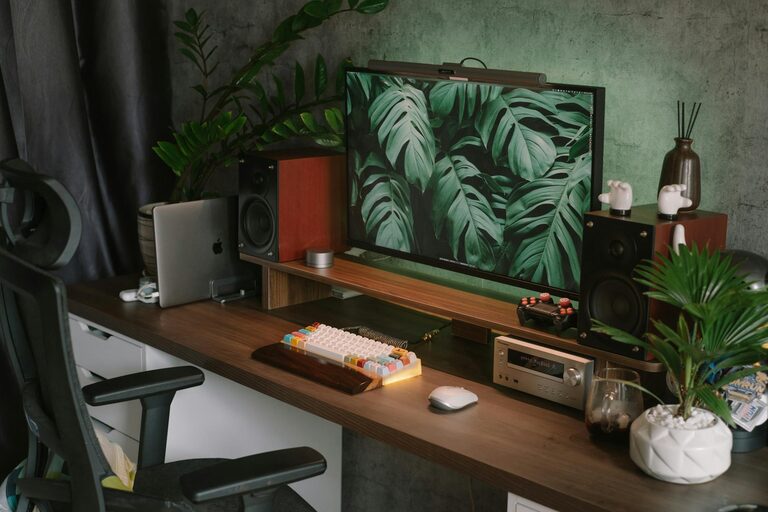
– Plants: Bringing greenery into your office can improve air quality and create a calming atmosphere.
– Artwork or photos: Visual elements that inspire or make you happy can boost morale.
– Comfort items: A cozy blanket or a favorite mug can make the environment more inviting.
Balance personalization with minimalism to avoid clutter.
6. Establish a Routine
A consistent daily routine helps train your brain for productivity. Elements to include:
– Set regular work hours: Starting and ending at the same times creates structure.
– Take breaks: Short breaks between tasks can refresh your mind. Try techniques like the Pomodoro method (25 minutes work, 5 minutes break).
– Create a start-of-day ritual: This could be a morning coffee or reviewing your to-do list.
Routines help separate work from personal life, especially when the office is at home.
7. Use Technology Wisely
Technology is essential but can also become a source of distraction:
– Select apps and tools that boost productivity: Task managers, calendar apps, or communication platforms.
– Limit multitasking: Focus on one task at a time for better quality work.
– Back up your work: Use cloud storage or external drives to protect important data.
8. Maintain Good Lighting and Air Quality
Good lighting and fresh air can improve comfort and cognitive function:
– Use adjustable lighting: Desk lamps for focused tasks and ambient lighting for overall brightness.
– Open windows when possible: Fresh air reduces stuffiness and keeps energy levels up.
– Consider air purifiers: If outdoor air quality is poor, air purifiers can improve indoor air.
9. Keep Healthy Habits in Mind
Your physical and mental well-being impact productivity. Incorporate these habits:
– Stay hydrated: Keep water nearby and drink regularly.
– Stretch or move regularly: Stand, stretch, or walk around to avoid stiffness.
– Set clear work-life boundaries: Avoid working late or overextending your day.
—
Final Thoughts
Creating a productive home office environment takes some planning and adjustments, but the benefits are well worth the effort. By choosing a suitable location, organizing your space, minimizing distractions, and establishing routines, you can build a workspace that supports your best work. Remember that small changes can lead to significant improvements in your focus and comfort—making working from home a more positive experience.
Related Posts
Tips for Creating a Cozy and Inviting Home Office Space
Creating a cozy and inviting home office space is essential…

Tips for Creating a Cozy Reading Nook in Your Home
Creating a cozy reading nook in your home is a…

Tips for Creating a Cozy and Productive Home Office Space
Creating a home office that is both cozy and productive…